


 BACK
BACKClimax Makes History with 1,000-foot Directional Drill Through Rock
 February 25, 2026 - Freeport’s Climax operation recently completed a more than 1,000-foot directional drill through hard rock, marking an important step toward safer, permanent pit dewatering and future mine planning.
For years, crews at the Colorado mine faced brutal weather and difficult access to reach pumps nearly 1,000 feet down in the pit to keep the generators fueled and the water flowing. Electrification of the dewatering process was identified as a solution, inspiring the team at Climax to get creative.
“Directional drilling in hard rock is basically unheard of,” said Alyssa Smith, Senior Geologist-Climax. “We were essentially trying to thread a needle deep underground. It required constant checks, constant adjustments and trusting the process.”
Directional drilling is a drilling method that allows a hole to be steered underground rather than drilled straight down. The process at Climax required drilling a pilot hole to chart the path and then enlarging it for utility use with a second pass, using a variety of drill bits and plotting dozens of downhole surveys in 3D space to ensure it stayed on track.
It took the combined work of engineers, geologists, drone pilots and others – part of a diverse, cross-discipline and multi-site team aiming to demonstrate Climax Molybdenum’s “One Colorado” approach.
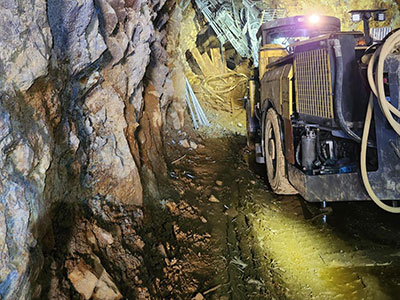
Thea O’Lari, Senior Civil Engineer-Climax, said this approach helped the team clear one of its biggest obstacles: drilling a precise, more than 1,000-foot pathway through solid rock and successfully breaking into an underground drift that hasn’t been used in decades.
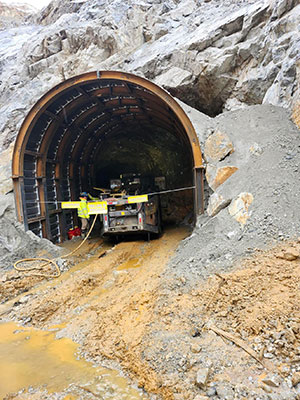 Work now is underway to reinforce and prepare the drill hole so it can safely carry utilities – a major milestone the team plans to reach this summer when it expects to pull fiber and power through the hole and electrify the pit.
While there is still work to be done, O’Lari said this first step is an important one in an improved direction for Climax. This option costs roughly half as much as the alternatives while providing longer-term solutions to ongoing operational challenges and better positioning the company for the future. By advancing the overarching pit dewatering project, it supports long-range operational planning and allows mining to continue at the bottom of the pit.
“This project is a game changer for Climax,” O’Lari said. “By electrifying the system, we’re not only improving safety by keeping people out of hazardous conditions, but we’re also creating a permanent solution that saves time and money. Seeing our team and partners make directional drilling work in hard rock mining has been incredible – it’s innovation in action.”
Photos (top to bottom): At Climax, crews enter an access for the drift being targeted by the drill team.



© 2026 Freeport-McMoRan
SOCIAL
RECOGNITION